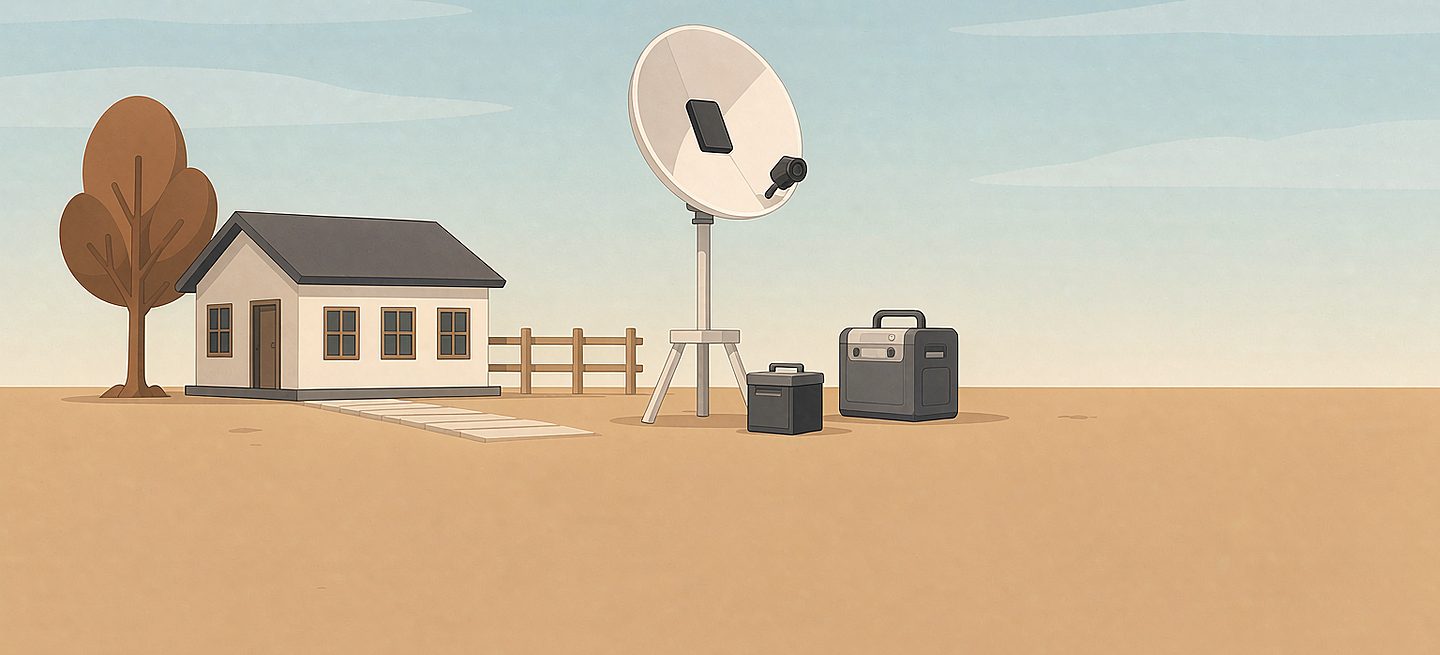
Short version: Starlink is not a light load, and off-grid only means one thing — you supply the watts. The choice is between running it off a 12V system you already have or a portable power station you can place anywhere. Both work; the only number that matters is battery size against the hours you actually need. The dish draws a steady load and spikes higher while it warms up or searches, so size the battery to the evening hours, not the sticker.
This pairs directly with the RV setup: same take-it-with-you logic, different half of the problem. If you are still picking a mount, the four mount types is the place to start.
How much does Starlink actually draw?
The dish pulls a steady load in normal use and spikes higher while it warms up in cold weather or searches for the sky after a move. Plan around the running draw, not the peak — but a cold start is exactly where a small battery gets caught out. Cold-weather draw is higher for this reason, so leave margin for dawn.
| Scenario | What it draws | Battery impact |
|---|---|---|
| Steady running, mild weather | A steady low load | The baseline you size against |
| Cold start or snow melt | Noticeably higher briefly | Catches out a small battery at dawn |
| After a move, re-acquiring | Higher while searching | Short, but plan for it |
Option 1 — off your existing 12V system
If you already have house batteries — an RV, a cabin with solar, a van — running Starlink off 12V is the cheapest path because the capacity is already there. The catch is that you share that capacity with everything else, so a few extra hours of dish use can quietly drain what you needed for lights. A renter's setup and a rural cabin both lean on this approach.
Option 2 — a portable power station
A dedicated power station is the flexible option: place it where the tripod is, recharge from solar or shore power, and keep the rig's batteries for essentials. You pay for the convenience up front, but it decouples Starlink from your main system entirely.
Sizing the battery
Size to the hours you need, not the dish's peak. A weekend of evening use is a different battery from a full off-grid winter. The working rule: take the running draw, multiply by the hours you want, add a margin for cold starts, and that is your usable battery target. For camping a small station often does it; for a permanent off-grid place, solar input matters more than the battery itself.
Cable and charging while running
Keep the cable run short and protected, and if you charge the battery while the dish runs, make sure the input outpaces the draw — otherwise you are only slowing the drain. The RV setup guide covers routing a short, safe run.
Common mistakes
1. Sizing to peak draw
The peak is brief; the running load is what empties the battery overnight. Plan for the hours, not the spike.
2. Forgetting the cold start
A battery that is fine at noon browns out at dawn when the dish warms up. Leave margin.
3. Running it off the starter battery
Do not. A flattened vehicle battery is a worse problem than no internet.
FAQ
Can Starlink run off a 12V battery?
Yes — if you already have a 12V system with capacity, running the dish off it is the cheapest off-grid option. You are sharing that battery with everything else, so size for the hours you need.
How big a battery do I need for Starlink off-grid?
Size to the running draw multiplied by the hours you want, plus margin for cold starts and re-acquiring after a move. A weekend of evening use needs far less than a full off-grid winter with no solar.
Can I use a portable power station?
Yes, and it is the flexible choice: place it by the dish, recharge from solar or shore power, and keep your main batteries for essentials. You pay up front for the convenience.
Does Starlink use more power in cold weather?
It draws more while warming up or melting snow, which is why a small battery can brown out at dawn. Plan margin for cold starts rather than just the mild-weather running load.
Can I charge the battery while Starlink runs?
Yes, but the charging input has to outpace the dish's draw, or you are only slowing the drain. Match the input to the load if you plan to run continuously.
Starlink Tripod Stand
The freestanding mount for off-grid and portable use — packs down, adapter in the box, nothing extra to buy.