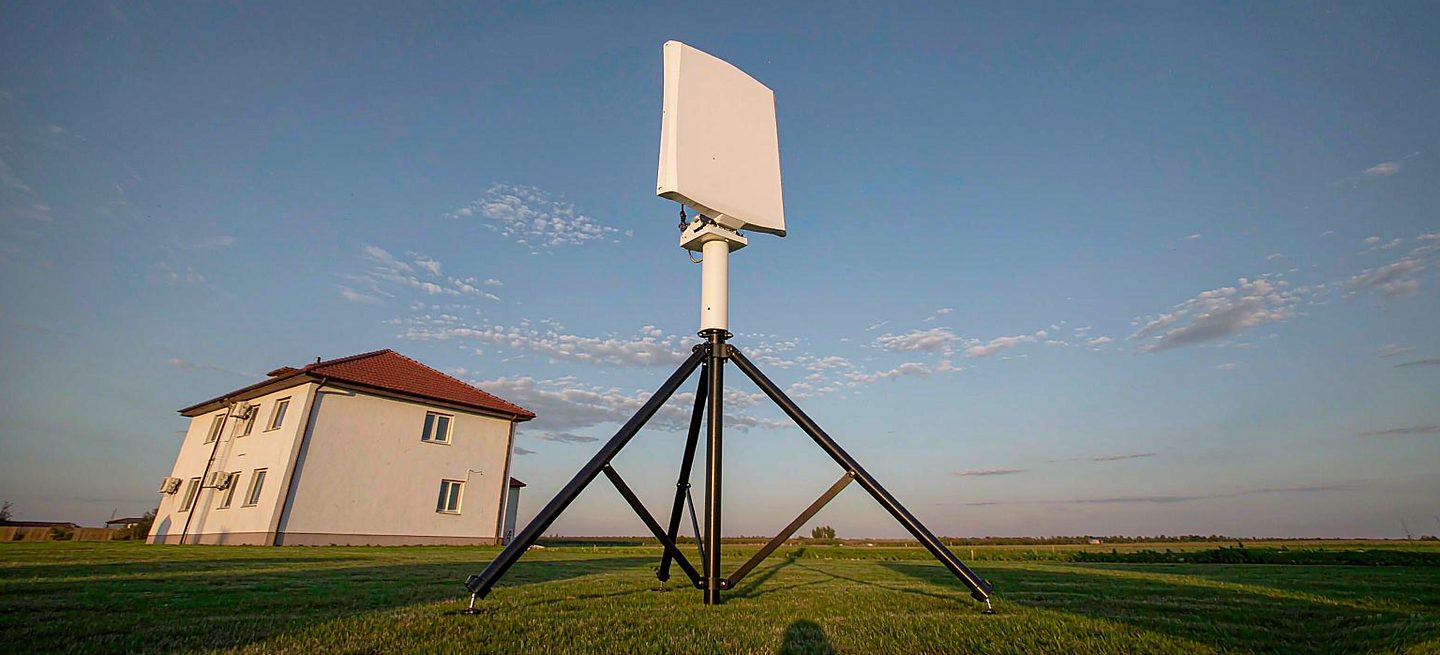
Short version: if you rent, the mount that wins is not the one that is easiest to install — it is the one that is easiest to uninstall. That single change of question rules out every bracket screwed into the building and leaves a freestanding stand, which is the only setup where move-out day looks exactly like move-in day.
Most guides answer "how do I avoid drilling?" — and for a renter that is the wrong question, because it is not the hole itself that costs you. It is what has to happen to the hole before someone else inspects the property, and whether the hardware you bought can come with you when you leave. Those are two separate problems, and only one type of mount solves both. If you are still deciding between mount types generally, the buying guide narrows it down first; this article is about the renting case specifically.
Two costs, and the second one is the one you pay
Every install has an installation cost and a removal cost. In a house you own, the removal cost is effectively zero, because nobody is going to look and nobody is going to charge you for it — so the whole decision collapses into "what is easiest to put up and most solid once it is there". That is why owner-occupier advice is so consistently in favour of brackets.
A rental inverts it. The installation cost is paid once, in an afternoon. The removal cost is paid later, at the worst possible moment, and it is charged at the rate of whatever it takes to make the property look untouched: filler, matching paint, a proper roof repair if you went through the covering, and in the worst case a deduction from a deposit that was supposed to come back.
So the sensible way to choose is to score both columns. It is the same hardware either way — the only thing that changes is which column you weight.
What each mount leaves behind
| Mount | What it leaves behind at move-out | Comes with you? |
|---|---|---|
| Freestanding stand | A flattened patch of grass, and nothing else | Yes |
| Wall or eave bracket | Sealed holes in the fascia or wall that still need filling and painting | No — the bracket, yes; the holes, no |
| Roof mount kit | Sealed holes through the roof covering | No |
| Router wall mount | Small screw holes in an interior wall | Yes, but the holes stay |
Three tests, in this order
If you only take one thing from this article, take the order. Renters get into trouble by asking test three first.
1. Reversible? Can the entire install be taken apart so the property looks untouched? A stand passes with no work at all. A bracket passes only after filler and paint, and a roof penetration passes only after a proper repair. Score this before anything else, because it is the only test with a deadline attached.
2. Portable? Does the hardware move with you, or is it spent? A stand is entirely reusable — the same unit covers this address, the next one, and a campsite in between. A bracket is partly reusable (the bracket travels, the holes do not), and a roof kit is close to single-use once it is sealed into a covering you are walking away from. That matters because renters move more often than they expect to.
3. Stable? Will it hold up where you are putting it — ground level, wind exposure, base weight? This is the test every buying guide starts with, and it is genuinely important. It is just not the one to start with when you do not own the building, because a setup that fails test one can fail expensively no matter how well it scores here. The freestanding article works through the stability side properly, including the one case where a stand is the wrong answer.
The clauses worth reading once
We are hardware people, not lawyers, and tenancy rules differ by country, state and landlord — so treat this as a reading list rather than advice. In most residential leases the same three subjects come up, and they are quick to find:
Alterations to the property. Usually the broadest clause, and the one that covers anything you attach to a wall, a fascia or a roof. Look for whether it requires written consent, and whether it distinguishes between damage and improvement.
Antennas, dishes and aerials. Some leases, HOAs and strata rules address satellite dishes specifically rather than lumping them in with alterations. If yours does, it may set conditions about where a dish may be placed or how it is fixed.
Professional installation. Occasionally required for anything mounted on the building. Worth knowing before you plan an afternoon with a drill, because it changes the cost of the whole exercise.
A freestanding setup does not require you to win an argument about any of these, which is most of its value as a renter's answer. It sits on the ground rather than on the building.
The position almost never transfers
This is the part renters consistently underestimate. Choosing where the dish goes is not a decision about the dish — it is a decision about the obstructions at one specific address: the tree line, the neighbour's roof, the chimney, the fence. Move and that entire picture is different, usually in a way that is not obvious from the driveway.
The practical consequence: any position you choose now is a temporary decision whether you treat it as one or not. If you installed with a bracket, moving means a second installation and a second set of holes, and the first set is still in a house you have left. If you installed with a stand, moving means carrying it in, walking the dish around, and reading the obstruction map until the obvious spot appears — the same half hour you spent the first time, with nothing to repair at either end.
Plenty of renters keep a stand permanently for exactly that reason, well past the point where they could have drilled. The no-drill comparison covers the other options for the same constraint.
If you have already drilled something
You are not stuck, and it is worth doing properly rather than hoping nobody looks.
On a wall or a fascia, the repair is ordinary: fill the hole, sand it flush, and paint to match. Take a photo of the surface in daylight before you buy paint, because matching a weathered exterior finish is the fiddly part. If the bracket was into a wall and the holes are small, the repair is invisible within a season of weathering.
A roof is different. A penetration through a covering goes through whatever waterproofing the roof relies on, and closing it means reinstating that layer rather than filling a hole — on a membrane roof it is patched with the same membrane, on shingle it is a course of shingle work. That is a roofing job, not a filler job, and it is worth paying for once rather than discovering a stain on a ceiling after you have moved out. The roof-type article explains what each covering does and does not tolerate.
What makes a rental install go wrong
1. Answering the wrong question
"How do I avoid drilling?" is only half of it. The full question is "what will this look like on the day I move out?", and a bracket that was easy to install can still fail that one.
2. Under-building the base because it will only be there a while
Temporary does not mean lightly built. A stand held down by two paving slabs feels fine until the first real wind, and the dish coming down is how renters end up with a cracked panel and a dented gutter they now have to explain.
3. Treating the dish as safe because nothing was installed
A freestanding dish is loose hardware sitting outdoors. If the yard is shared or the street is busy, it can be walked into, driven over or carried off — which is a consideration no bracket ever has.
4. Buying to the smaller dish
The mast thread is shared between the Standard dish and the Mini, so fit tells you nothing about load — the Standard is roughly four times the weight and catches far more wind. If you are carrying the hardware between two addresses and might own both dishes, buy to the heavier one. The Gen 3 vs Mini comparison sorts out which you have.
5. Keeping the box in a shed you are about to leave
Unglamorous and expensive. Flat-packed hardware survives a move badly when the padding and the fasteners go missing, and the box is also the thing that makes the next install take twenty minutes instead of an evening with a jar of odd screws.
FAQ
What is the best Starlink mount for renters?
A freestanding stand, on removal cost rather than on performance. It is the only option that leaves the building untouched, which is the cost you actually pay as a tenant, and the whole setup travels to the next address.
Do I need my landlord's permission to put up a dish?
Read your lease first — rules differ by country, state and landlord, and this is not legal advice. The clauses that usually matter cover alterations to the property and anything mounted on the outside of the building. A freestanding setup mostly sidesteps the question, which is a practical advantage whatever the lease says.
Will my dish position work at my next address?
Almost never, because a position is chosen around the obstructions at one address. Move and you survey again. A stand makes that free; a bracket makes it a second installation.
How do I repair the holes if I already mounted a bracket?
On a wall or fascia: filler, sanding, paint matched in daylight. On a roof: not a filler job — the repair has to reinstate the waterproofing the penetration went through, so get someone who does roofing to close it properly.
Is a freestanding stand stable enough to leave out all season?
It can be, if the base is ballasted on a hard surface or anchored on anything soft. A stand carries wind load by weight rather than by fasteners, so the base is the part that has to be over-built. If you would rather not think about it, take the dish down before a storm.
Tell us where you are moving to, and we will tell you what travels
Send us two things: the model on the label on the back of the dish, and a photo of the ground you plan to stand it on — grass, deck, paving, balcony. We will tell you whether a freestanding install holds there, how much ballast it needs, and which size to take with you. A minute of your time, and it saves a return.