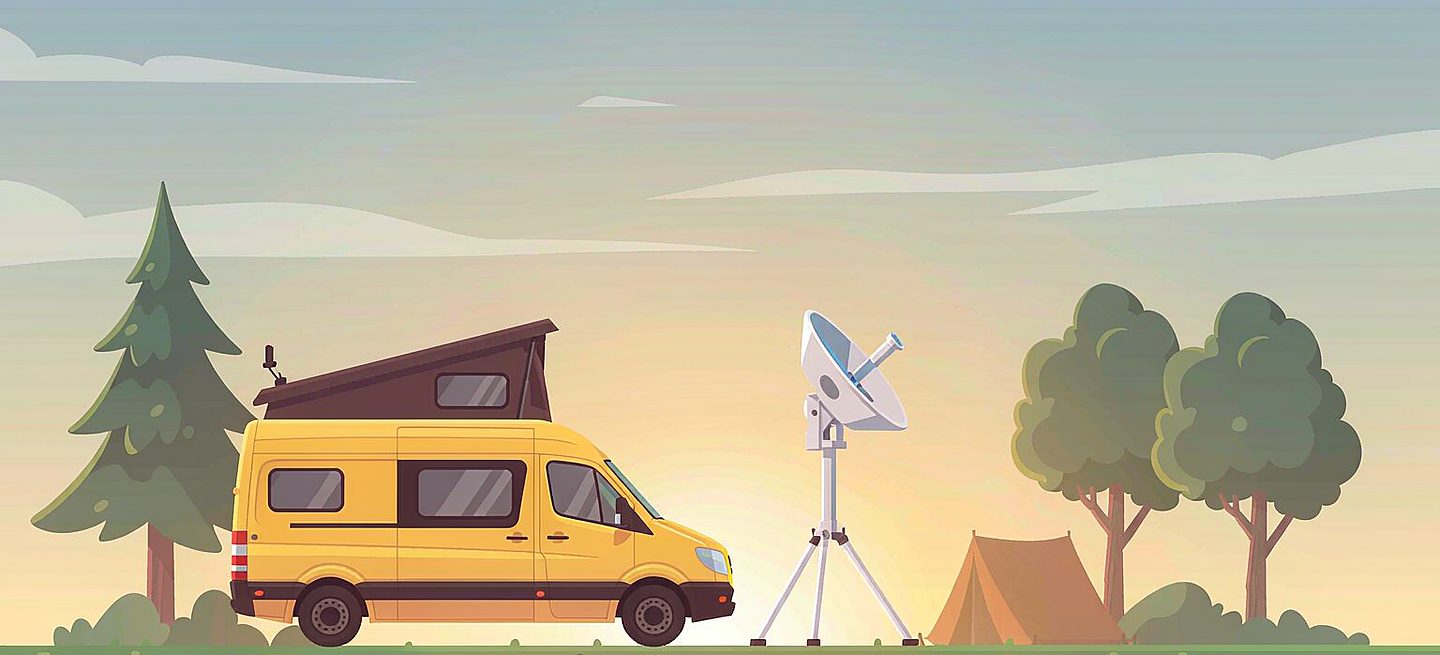
Short version: the RV Starlink setup that works is the one you can take down and move — a freestanding tripod stand you set on the ground beside the rig, powered from the 12V system or a portable battery, with the cable run short and protected. The dish's own 1.5 inch thread means the stand takes it directly and there is no official adapter to buy. The mistakes are predictable: mounting something permanent on a vehicle that moves, under-powering it, and pointing it at the side of a neighbour's rig.
This is the mobile end of the same problem renters face — the cost that decides the mount is removal, not installation. A tripod leaves nothing behind. If you are choosing one rather than replacing one, the tripod stand buyers guide runs through height, stability and the thread.
Mount: freestanding, not fixed
A roof mount on an RV is tempting for the height, but it stays up in transit, adds wind load you did not ask for, and cannot be moved to clear an obstruction. A tripod stand set on the ground or a level pad beside the rig is the move: no fixing, packs down, and you can walk it around until the obstruction check clears. The adapter is in the box, so there is nothing else to buy. If you must get height, a short mast on the tripod beats a permanent roof penetration.
| RV option | Survives the drive? | Move it to clear a view? | Leaves marks? |
|---|---|---|---|
| Tripod stand on the ground | Packed away while driving | Yes — walk it around | None |
| Roof mount, fixed | Exposed to wind load | No | Holes in the roof |
| Suction / magnetic | Not for a dish this weight | Yes | None, but unreliable |
Power: 12V first, battery second
Starlink draws a meaningful load, and how you feed it decides whether you stay up through a cloudy day. Straight off the rig's 12V system is simplest if you already have capacity; a dedicated portable power station is the flexible option for boondocking. The off-grid power guide works through runtimes and battery sizes properly — the short version is that you size the battery to the hours you actually need, not the dish's peak draw.
Cable: keep it short and safe
The dish cable is fixed length, so plan the tripod position to keep the run short rather than stretching it. Where it crosses a step or an edge, a sleeve stops it rubbing through. Route it so it cannot be closed in a door or run over when you pull out.
Where you park decides the view
A packed campground is a forest of obstacles at dish height. The obstruction check still applies — run it from where the tripod will actually sit, and be ready to move the stand a few metres to clear a neighbour's rig or a tree. Moving sideways usually beats raising the dish, and a tripod is the only mount that lets you do that casually.
Common mistakes
1. Fixing a permanent mount to a moving vehicle
A bracket that survives one pothole rarely survives a season. Freestanding wins for anything that travels.
2. Under-sizing the battery
A dish that browns out at dusk is worse than no dish. Size for the hours you need, not the sticker draw.
3. Pointing at the wrong side
The dish finds the sky itself, but only if the sky it sees is clear. Check before you settle, every site.
FAQ
What is the best Starlink mount for an RV?
A freestanding tripod stand set on the ground beside the rig. It needs no fixing, packs down to move, and you can walk it around to clear obstructions. The adapter is in the box, so nothing else has to be bought.
Can I use Starlink while driving?
The dish is designed to be stationary when in use, and in-motion use is a separate product and mounting consideration. For an RV, set the tripod up when parked; do not run it from a moving vehicle.
How do I power Starlink off-grid in an RV?
From the rig's 12V system if you have capacity, or a portable power station for boondocking. Size the battery to the hours you need rather than the dish's peak draw — the off-grid power guide works through the numbers.
Do I need the official pipe adapter for an RV setup?
No. The tripod stand takes the dish's 1.5 inch thread directly and ships with its adapter in the box, so there is nothing extra to buy.
Will a roof-mounted dish survive highway speeds?
A permanently fixed roof mount stays exposed to wind load in transit and cannot be moved to clear an obstruction when parked. A freestanding tripod you set up when stopped avoids both problems.
Can I use it at a campsite with no hookups?
Yes, that is exactly what a portable power station is for. The limit is battery size, not the dish — plan the runtime and you stay connected without shore power.
Starlink Tripod Stand
Freestanding, packs down, and the adapter is in the box — the mount you take with you, no official adapter to buy.